 Add to Chrome
 Add to Firefox
 Add to Edge
MARVEL: A Multi Agent-based Research Validator and Enabler using Large Language Models
Jan 06, 2026
We present MARVEL (https://ligogpt.mit.edu/marvel), a locally deployable, open-source framework for domain-aware question answering and assisted scientific research. It is designed to address the increasing demands of a digital assistant for scientific groups that can read highly technical data, cite precisely, and operate within authenticated networks. MARVEL combines a fast path for straightforward queries with a more deliberate DeepSearch mode that integrates retrieval-augmented generation and Monte Carlo Tree Search. It explores complementary subqueries, allocates more compute to promising branches, and maintains a global evidence ledger that preserves sources during drafting. We applied this framework in the context of gravitational-wave research related to the Laser Interferometer Gravitational-wave Observatory. Answers are grounded in a curated semantic index of research literature, doctoral theses, LIGO documents, and long-running detector electronic logbooks, with targeted web searches when appropriate. Because direct benchmarking against commercial LLMs cannot be performed on private data, we evaluated MARVEL on two publicly available surrogate datasets that capture comparable semantic and technical characteristics. On these benchmarks, MARVEL matches a GPT-4o mini baseline on literature-centric queries and substantially outperforms it on detector-operations content, where domain retrieval and guided reasoning are decisive. By making the complete framework and evaluation datasets openly available, we aim to provide a reproducible foundation for developing domain-specific scientific assistants.

A Neural Network-Based Search for Unmodeled Transients in LIGO-Virgo-KAGRA's Third Observing Run
Dec 27, 2024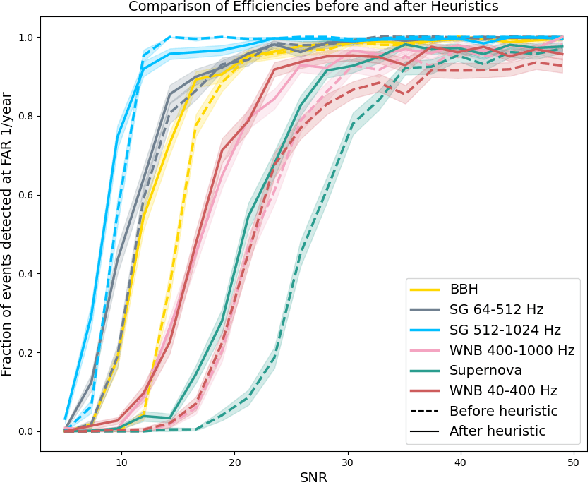
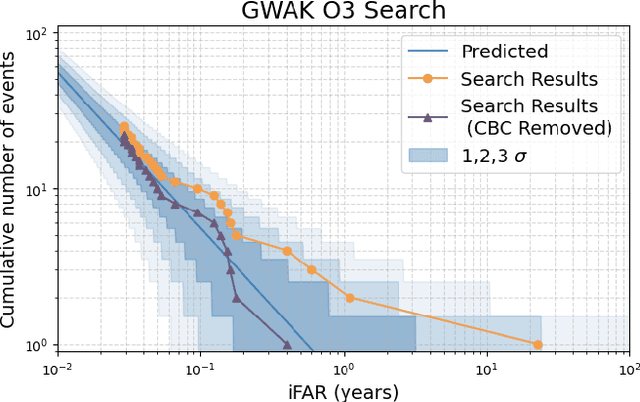
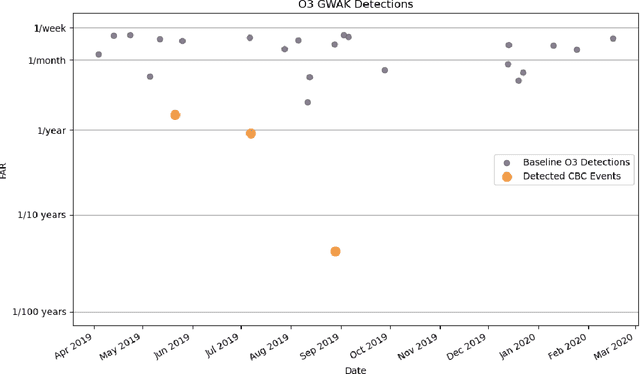

This paper presents the results of a Neural Network (NN)-based search for short-duration gravitational-wave transients in data from the third observing run of LIGO, Virgo, and KAGRA. The search targets unmodeled transients with durations of milliseconds to a few seconds in the 30-1500 Hz frequency band, without assumptions about the incoming signal direction, polarization, or morphology. Using the Gravitational Wave Anomalous Knowledge (GWAK) method, three compact binary coalescences (CBCs) identified by existing pipelines are successfully detected, along with a range of detector glitches. The algorithm constructs a low-dimensional embedded space to capture the physical features of signals, enabling the detection of CBCs, detector glitches, and unmodeled transients. This study demonstrates GWAK's ability to enhance gravitational-wave searches beyond the limits of existing pipelines, laying the groundwork for future detection strategies.
Rapid Likelihood Free Inference of Compact Binary Coalescences using Accelerated Hardware
Jul 26, 2024
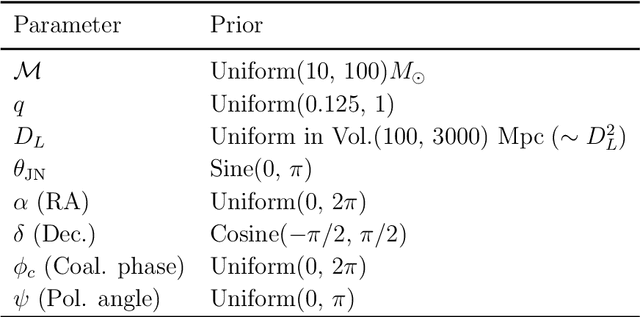


We report a gravitational-wave parameter estimation algorithm, AMPLFI, based on likelihood-free inference using normalizing flows. The focus of AMPLFI is to perform real-time parameter estimation for candidates detected by machine-learning based compact binary coalescence search, Aframe. We present details of our algorithm and optimizations done related to data-loading and pre-processing on accelerated hardware. We train our model using binary black-hole (BBH) simulations on real LIGO-Virgo detector noise. Our model has $\sim 6$ million trainable parameters with training times $\lesssim 24$ hours. Based on online deployment on a mock data stream of LIGO-Virgo data, Aframe + AMPLFI is able to pick up BBH candidates and infer parameters for real-time alerts from data acquisition with a net latency of $\sim 6$s.
Optimizing Likelihood-free Inference using Self-supervised Neural Symmetry Embeddings
Dec 11, 2023Likelihood-free inference is quickly emerging as a powerful tool to perform fast/effective parameter estimation. We demonstrate a technique of optimizing likelihood-free inference to make it even faster by marginalizing symmetries in a physical problem. In this approach, physical symmetries, for example, time-translation are learned using joint-embedding via self-supervised learning with symmetry data augmentations. Subsequently, parameter inference is performed using a normalizing flow where the embedding network is used to summarize the data before conditioning the parameters. We present this approach on two simple physical problems and we show faster convergence in a smaller number of parameters compared to a normalizing flow that does not use a pre-trained symmetry-informed representation.
Physics Community Needs, Tools, and Resources for Machine Learning
Mar 30, 2022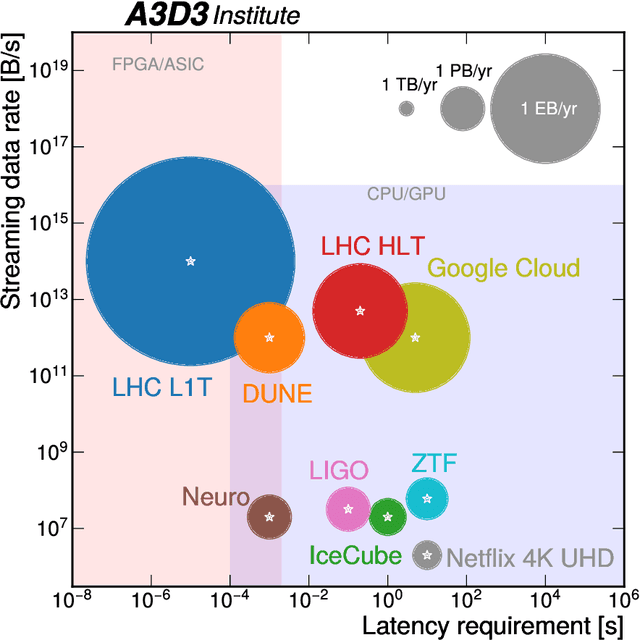
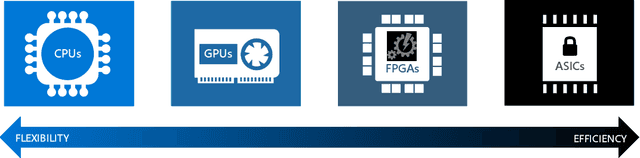
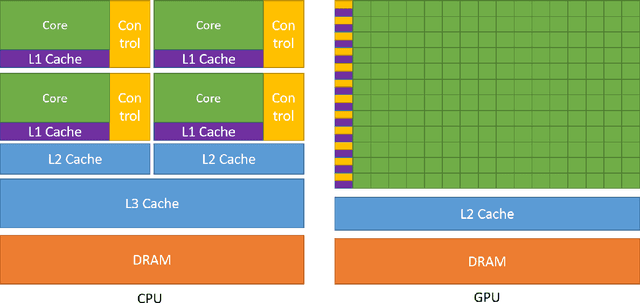
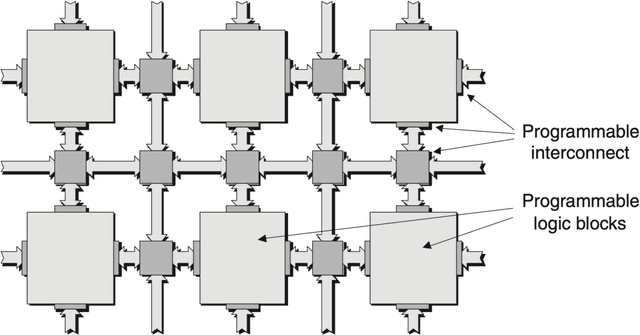
Machine learning (ML) is becoming an increasingly important component of cutting-edge physics research, but its computational requirements present significant challenges. In this white paper, we discuss the needs of the physics community regarding ML across latency and throughput regimes, the tools and resources that offer the possibility of addressing these needs, and how these can be best utilized and accessed in the coming years.
Applications and Techniques for Fast Machine Learning in Science
Oct 25, 2021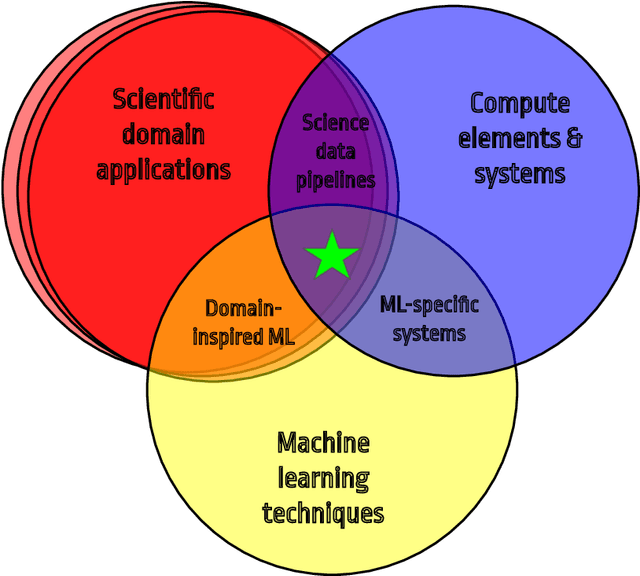
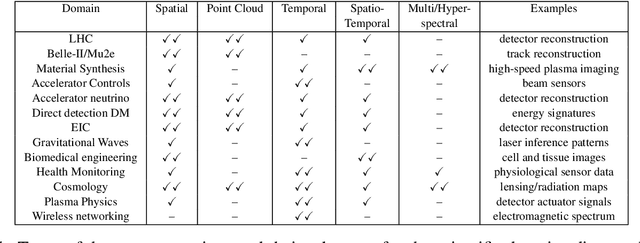
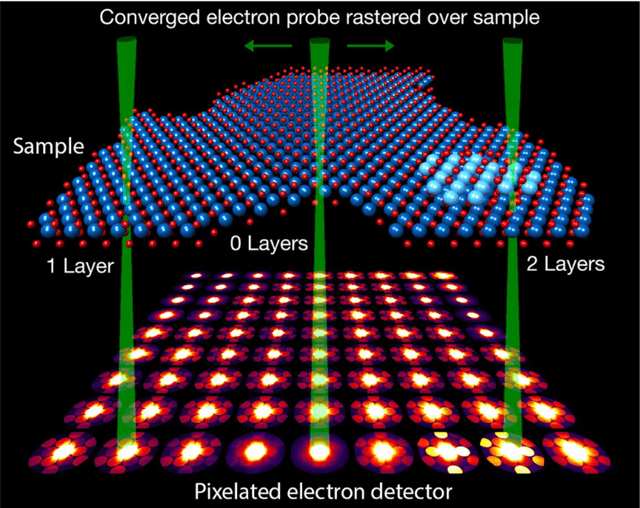
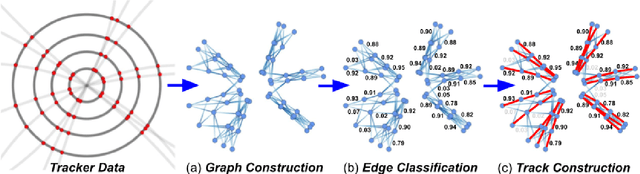
In this community review report, we discuss applications and techniques for fast machine learning (ML) in science -- the concept of integrating power ML methods into the real-time experimental data processing loop to accelerate scientific discovery. The material for the report builds on two workshops held by the Fast ML for Science community and covers three main areas: applications for fast ML across a number of scientific domains; techniques for training and implementing performant and resource-efficient ML algorithms; and computing architectures, platforms, and technologies for deploying these algorithms. We also present overlapping challenges across the multiple scientific domains where common solutions can be found. This community report is intended to give plenty of examples and inspiration for scientific discovery through integrated and accelerated ML solutions. This is followed by a high-level overview and organization of technical advances, including an abundance of pointers to source material, which can enable these breakthroughs.
Enabling real-time multi-messenger astrophysics discoveries with deep learning
Nov 26, 2019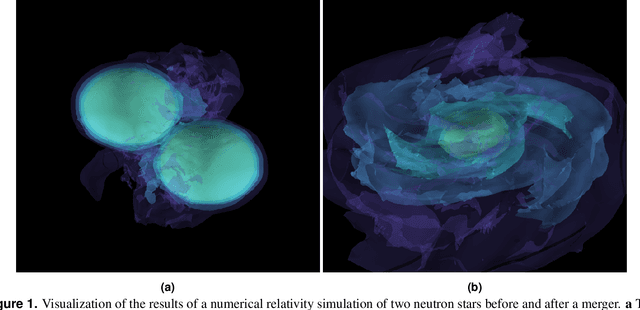
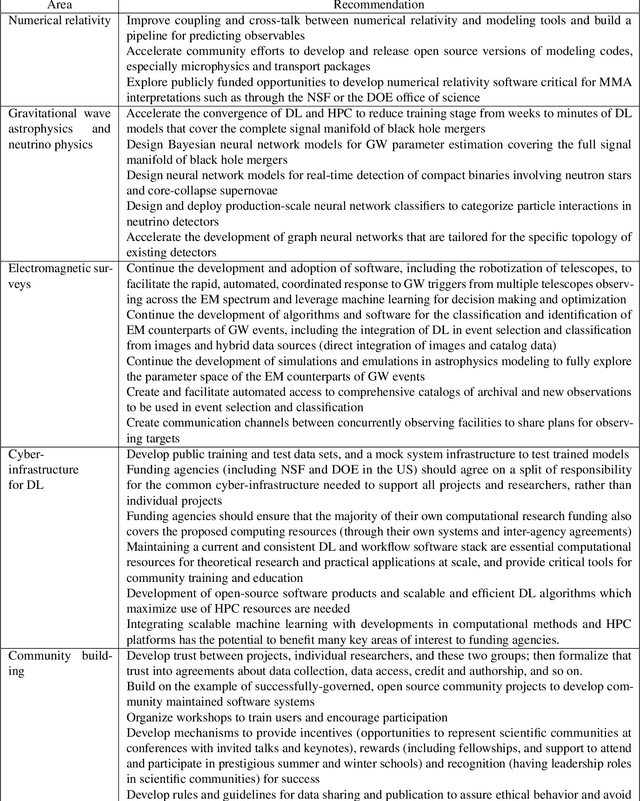
Multi-messenger astrophysics is a fast-growing, interdisciplinary field that combines data, which vary in volume and speed of data processing, from many different instruments that probe the Universe using different cosmic messengers: electromagnetic waves, cosmic rays, gravitational waves and neutrinos. In this Expert Recommendation, we review the key challenges of real-time observations of gravitational wave sources and their electromagnetic and astroparticle counterparts, and make a number of recommendations to maximize their potential for scientific discovery. These recommendations refer to the design of scalable and computationally efficient machine learning algorithms; the cyber-infrastructure to numerically simulate astrophysical sources, and to process and interpret multi-messenger astrophysics data; the management of gravitational wave detections to trigger real-time alerts for electromagnetic and astroparticle follow-ups; a vision to harness future developments of machine learning and cyber-infrastructure resources to cope with the big-data requirements; and the need to build a community of experts to realize the goals of multi-messenger astrophysics.
* Invited Expert Recommendation for Nature Reviews Physics. The art work produced by E. A. Huerta and Shawn Rosofsky for this article was used by Carl Conway to design the cover of the October 2019 issue of Nature Reviews Physics